Thursday, March 16, 2017

Zorba and the New School of Greek Philosophy

When I was an undergrad (Truman State University), I was obliged to take a basic, liberal science philosophy class.  I was skeptical - that I'd enjoy it, that it would be interesting, or even worthwhile.  I ended up not only loving the class, but having some thought-provoking and even paradigm-shifting moments that changed the way I conceived of the world from then on.
Even in Lego form, Zorba has style.
The textbook we used was a huge part of the appeal.  I still recall the title: Looking At Philosophy: The Unbearable Heaviness of Philosophy Made Lighter - it was tongue-in-cheek, to be sure, but the history and translation of the basic - and sometimes very esoteric - philosophical concepts - was solid.  We also learned about the great philosophers themselves - Plato, Aristotle, Socrates, many of ancient Greece, and their concepts and thought strategies, through illustration.  Perhaps that seems a little babyish for a college class, but there was a great power to using illustrations and imagery to communicate these ideas.  

Zorba, for me, and for the writer who conceived of him, knows this power of illustrating these philosophical concepts, too. Zorba the character could be called a hedonist, or a pleasure-seeker, a philosopher who can see the finite nature of life (and all its pain) and believes in grabbing hold of it how he chooses, when he chooses.  We see throughout the story that Nikos definitely goes through changes, but it cannot be said that Zorba doesn't also change a little bit, through his love for and attachment to Nikos (Zorba tries not to get too attached to anything, although it is clear he's very affectionate and strives for trying to do individual good). 
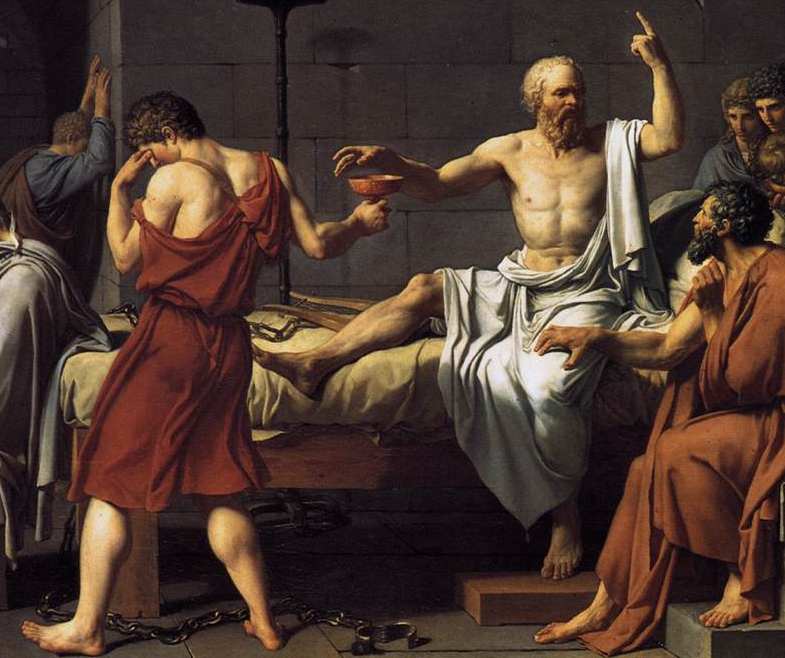
Don't do it, Socrates!
So what can Zorba's new Greek philosophy teach us?
  • Be kind. Approach everyone with a smile and a zest for life. Bring out something in THEM.
  •  Don't put too much stock in any one thing, whether it be your future, dependence on another, or a job.
  • The present is what matters.  The future is a 'pig's behind.' Logic, however, is 'a woman's backside.' Zorba's an ass man, what can I say?
  • Death is natural and inevitable.  Live each day as though you were going to die any minute.
  •  There is an inner and an outer you. The inner you is whatever you make it.  Maybe he is slender as a reed and wears a red carnation behind his ear.
  • If a person you like expresses interest in you romantically, call their bluff IMMEDIATELY.  Go after them.
  •  Good stuff happens; bad stuff happens, too.  God and the Devil always travel together.  Good and bad karma?
  • Old birds make the best stew.  
  • Finally, never wear another man's ring.  It is not manly.   
I'm going to miss Zorba and his zest for life.  In theatre, a lot of my friends have bucket lists - dream roles they'd love to do.  I love to hear about them, and cheer them on, but I don't really have any for myself.  I have always felt that since I'm still a newbie to the scene, I'm lucky to take much of whatever comes along - I kind of "hope for nothing" in that sense, and that IS a little freeing, as Zorba says.  Here's to Zorba, and to two more excellent weekends of theatre and philosophy...washed down with raki and ouzo, of course.

Tuesday, February 7, 2017

Mobbed

In a particular scene in "Zorba," Zorba's young friend Nikos, annoyed by his older companion's encouragement to be what he feels is inappropriately forward and amorous, protests, "I am not an animal!"  Zorba, delighted by his friend's sudden fire, rejoins "Yes, you are!"  In this musical's delightfully passionate book, we're treated to a lot of Zorba's personal philosophies, and one of them being his attitude toward women, which is all at once tender and poetic as well as lusty, spontaneous and sanguine. Zorba is never apologetic, he's nearly always self-possessed, and while it seems like he encourages spur of the moment action without thought, he is driven by his own principles of seizing life, positions he's arrived at during life experience - as opposed to Nikos, who is learned and educated, but relatively inexperienced.  

If Nikos needs to get in touch with his animalistic side, the villagers could often do with a touch of his humanizing restraint and reflection.  All at once full of life and afraid of change, the Cretans are written as often superstitious, mocking, tribal, greedy and even murderous.  It's into this world that Nikos and the mysterious widow attempt to have a relationship, and are thwarted by the town's prejudice against one of their own, though shunned coupling with an outsider after rejecting their own.  Led by the men of the town who simultaneously desire (perhaps desire to control) AND despise this proud, reclusive woman, they surround her and have her killed for "driving" a young man to his suicide, while they conveniently absolve themselves of any role in his death (in the version of the play we have, it's written he's running from his tormentors - the townspeople - when he accidentally falls from a cliff's edge, rather than takes a proverbial lover's leap).

The townspeople are cloistered but intrigued about the arrival of Zorba and Nikos.  Wary of outsiders, they still treat Hortense, an older Frenchwoman who has lived on the island for decades, like a stranger.  Her house is the only decent lodgings in town (which a song assures us still isn't very good), and still the townspeople try to offer unappealing, primitive-sounding accommodations.  They are largely idle and are excited by the prospect of work in a mine.  One of the main characters basically lives on his odd jobs - being a messenger, carrying luggage, etc. - and the kindness of people like the widow.  Nikos even calls the island a "wild place," and we see the women descend like the "crows" in the song to pluck the widow's fine house clean just moments after her death.  In these moments, though - it is Zorba, not Nikos, who is the humanizing force.  He appeals to Nikos for calm after he shakes the hand of one of the murdering mob as the mine is opening, and asks him not to judge the scavengers that snatch the widow's belongings - "you can't hurt the dead. Only the living."

As individuals, we see the characters of the townspeople as colorful, curious, and passionate, if rough around the edges.  Together, however, they often are a faceless mob, mocking, grabbing, attacking, ravaging.  John Steinbeck, one of my favorite authors, loved to write about how mob mentality could destroy an individual's ability to think as well as human lives.  In literature as well as history, mobs are deadly at worst - part of peaceful protest training throughout the years has been to prevent a group of protestors from becoming the mob, from getting aroused to anger as a result of groupthink, because it's very easy to slip into the hypnotic power of the masses.  To Steinbeck, a person's ability to think individually and rise above the "phalanx" was key.  I'll never forget getting groped and grabbed at Mardi Gras years ago by I'm sure otherwise normally-acting men - somehow given license to do so by the rowdy crowds gathered.  I gave them the benefit of the doubt for their awful behavior - blaming it on mob mentality, hurricanes, and hormones, but it doesn't make it right.  If anything, it reinforced my belief that we should keep striving to be a voice of reason and rise ABOVE our "animal" instincts - Zorba knows the animal side of human nature and human psychology, but the important part is that he acknowledges that it's a two-sided coin.


So did Tom Joad.
In the mob scenes in this musical, we see Zorba, ever the rugged individualist, ever the singular philosopher, emerge as the hero - not a sinless person, by his own admission, but a self-possessed person who is fully in control of his own ability to react to a situation.  That's part of what makes him such an appealing character - he ACTS as opposed to just REacting, and he acts decisively and based on his own personal truths, while encouraging his friends to do the same.  What would Zorba do?


Friday, January 20, 2017

Vive la Difference

It's been a few weeks since we started rehearsals for Zorba, Kander and Ebb's spirited but occasionally apologetically brutal musical based on the book and movie, Zorba the Greek.  Set in early 20th-century Crete, the plot follows the story of a Niko, former Athens teacher who finds himself mixed up with the aging but lusty, spontaneous and impish title character while on his way to try to make his fortune by re-opening the island's mine - his new inheritance.

Good Call, Niko


The people of Zorba's world are full of life and welcome as they are often crude, superstitious and mistrusting.  As the two acclimate to Crete among its curious inhabitants, we see them embark on romances - one, Zorba and his paramour, the charming but companionship-starved Madame Hortense, and Niko with a quiet outcast, a mysterious widow who is both hounded by advances and rebukes from the other townspeople.  In the audience, we're treated to two seemingly different female figures who are remarkably alike in their unapologetic fearlessness to live and operate by their own rules despite constant mockery. Madame Hortense is a former courtesan who reminisces about her glory days protecting her adopted homeland through sexual favors (and having quite a bit of fun while doing it), while the Widow (that's all we know her by - a moniker which in itself evokes surviving a painful past and inner strength) chooses who to be kind to by who is kind to her.  The men of the town seem to want her, but also hate her for what they see as her prerogative to only show favor to certain men - mostly the humane ones.  I'll blog more on her later.  Hers is an age-old problem universal for all womanhood, in a way.  In Greek mythology, Venus (her Greek name was Aphrodite) was also self-determining in the face of being overpowered; myths recount that she chose her lovers - most famously, Mars, or Aries, god of war - after a husband was chosen for her, the decidedly duller Vulcan, or Hephaestus. 

Probably not a real blonde, though.
Around the women of Zorba, the story ebbs and flows, and is also led.  Among the villagers, there is an enigmatic figure that is known as the "leader," played in our cast by the outstanding Lindsey Jones.  I love that this strong, almost godlike lead role was written as a woman - a knowing, respected, wise and powerful woman who takes the aspects of the story - the journeys, the losses, the joys - and celebrates, mourns, witnesses and marks them with the audience and the characters alike.  She AND Zorba call us to be present for our lives through their songs and philosophies.  They both remind us to be participants in our own stories, to reach out, to speak out, to embrace immediacy, but also to accept and remember. What I appreciate is that as much as this is Zorba and Niko's story (Niko is our audience stand-in as we're on this journey), that this is a story that couldn't happen without these self-determined, independent-minded female entities.  After all, in Zorba's story - "man is only a passerby."

Friday, May 20, 2016

How I Learned to Stop Worrying and Love the Bomb

"Nuking" something in the microwave (that's not what's happening at all, by the way).  Experiencing the "fallout" from a fight.  Visiting a real or metaphorical "ground zero" of an explosion (or most famously, at the World Trade Center site after 9/11).  Having a "meltdown."  Going "nuclear" on someone or using "the nuclear option" in congress.  Setting in motion a "chain reaction." Even saying something is "the bomb" (which I sometimes still say, I'm a nineties kid, sue me).  Our global politics, our pop culture, our language...there's nothing atomic weaponry hasn't affected in the 70 years since its arrival.

Just a week into rehearsals, Atomic director Scott Miller commented that the musical was a bit of a departure from the type of bread-and-butter musicals New Line Theatre specialized in: the smart-ass, sassy, even absurdist comedy-dramas that are smart, but also often winking at the audience.  Atomic is not that.  It has moments of charm, humor, and even whimsy, but overall it's an earnest story, there's no irony in the performances.  What's so weird about that?  Well, because for years now, something as horrific as nuclear weapons and atomic warfare has been something of a joke, or sci-fi fantasy fodder.

Take one of the favorite cartoonists from my childhood, Gary Larson, creator of "The Far Side" comics.  He had a fascination with them, for sure. Guys fishing spot mushroom clouds in the distance, and happily declare all fishing rules and regs null and void; a practical-joking physicist stands behind a colleague - who's assembling a nuclear weapon - ready to pop a bag and scare him; suburban housewives eyeball warheads in their neighbor's driveways like a new Chevy, and other fun stuff.  This one is one of my favorites:


I had to ask my parents what the "trees with rings around them" were, and my dad's explanation was maybe my first exposure to nuclear weapons.  For a kid growing up in the cold war era, "nukes" were of such a horrific, world-ending power, the only way we can wrap our minds around them is to joke.  From the masterpiece Dr. Strangelove to  the infamous scene of "nuking the fridge" in the latest installment of Indiana Jones and the Kingdom of the Crystal Skull, nuclear weapons are still scary, but like many scary things, we make light of them, we fetishize them, we write them in, all to gain a better understanding of what they mean and what we ourselves think of them. 

That's not how this works...that's not how any of this works!

The challenge of Atomic is to set this aside for awhile.  To compartmentalize the aforementioned comedy, as well as bits of horror-porn like the shocking scene from Terminator 2: Judgement Day where our heroine is blown to pieces by an atomic blast as she watches a bucolic scene of innocence (it's always a bucolic scene of innocence, isn't it?) on a playground, even the famously over-the-top political ad by the Lyndon B. Johnson 1964 presidential campaign:


Atomic takes place at a time when people were only first conceiving of what atomic warfare meant.  Our main protagonist, Leo Szilard, over the course of the musical, is consistently trying to sound the alarm about the weapon's massive power and destructive capabilities.  In his moving song, "the atom bomb is here," he correctly envisions what the bomb actually does and how it looks to its victims.  It's a haunting moment.  The writers here did most of the heavy lifting.  For anyone exposed to pop culture in the past decades, it's a shocking and sobering trip back in time.  Our challenge in this musical is to put the audience there and to have them feel the stakes these scientists and military officials must have felt, before the bomb became more of a sci-fi boogeyman and a metaphor for human folly. I'll still read "The Far Side" though, any day, but it's great to see an art form take such a straight-ahead treatment of this subject.  I hope it gets audiences thinking and talking.  After all, the atom bomb is still here.

Thursday, May 5, 2016

World of Gray: The Aftermath of the Aftermath

When I was in college, my boyfriend at the time was getting his Bachelor of Sciences in History.  I was intrigued at the time by the book he was reading, Judgment at the Smithsonian.  The book details the exhibit which was to be - using the famous Enola Gay as the focal point -  but never was - calling it "Banned History."

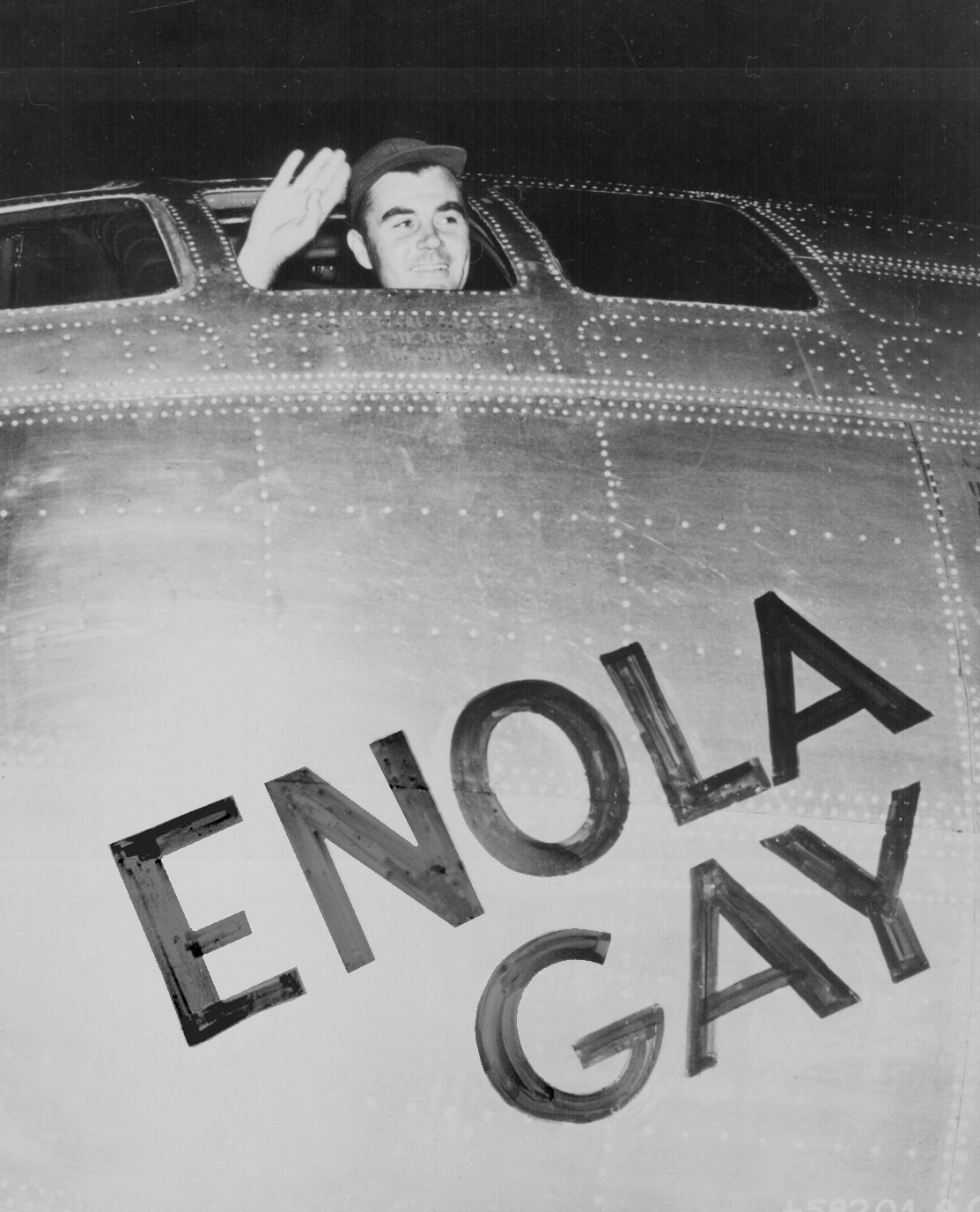
Colonel Paul Tibbets Waves from his plane, the Enola Gay.

In short?  The original exhibit as planned, which was to commemorate the 50th anniversary of the bombing of Hiroshima and Nagasaki, was scrapped and censored for a far more sanitized, even patriotic approach. The person who originally conceived the exhibit was Martin Harwit, a Cornell University professor, former serviceman and historian at the Smithsonian Air and Space Museum.  What apparently made it controversial was that it attempted to capture not only the events that led up to the bombing, but also the real and lasting impact the bomb had on the people who were affected by it, including the scientists who created it, to the military team that dropped it, to the victims of it.  It also questioned the common assumption that bombing the two cities in such a way saved lives instead of letting the war drag on.  As news of the exhibit spread, Veterans' groups complained to the then largely conservative congress, and the Smithsonian was forced to bow to public pressure and remove some of the more "controversial" images, including photos of destruction and burned victims, etc.  In addition, Harwit was forced to resign under the mounting pressure, almost in the same fashion Leo Szilard was pushed out of his own project.  There was a lot at stake - a fight over what really happened, a fight over the moral high ground and certitude.   We are still fighting this fight.  You only need to check out the Amazon reviews of Harwit's account to see how divided we STILL are on this, and what exactly constitutes "revisionist history," a term that's been fought over a lot in recent years.


After 9/11, we saw this same type of fight to elbow out nuances and details - gray area - in the "war on terror."  It became unpatriotic to even try to seek out why another cultural group - Muslim extremists -  might want to kill Westerners, short of empty explanations that "they're evil" or "they hate our freedoms."  It tends to have a chilling effect on discussion, even if it goes nowhere near unpatriotic sentiment.  We're uncomfortable with gray areas.  We don't like to see ourselves as culpable.
The Genbaku Dome today is the site of a peace memorial.

The Hiroshima Genbaku Dome following the bombing.

The 50th anniversary exhibit that never was - and what happened to it - has itself prompted a lot of writing and thinking about how  we teach history, and how we remember it, and, as the hit musical Hamilton asks, "who lives, who dies, who tells your story?"  The account in Judgment at the Smithsonian was probably a good meta-study for a student of history.


In Atomic, we see this play out from beginning to end in the production.  The questions still aren't answered.  When the song "What I tell myself" is sung toward the end of the show, it's a haunting "affirmation" of the decision.  "I did what I did 'cause I thought it the right thing to do..." but it's still just "what [they tell themselves]" just to be able to sleep - it's not what they necessarily believe any longer.  The plaintive lullaby tune of the song serves to underline the need to calm their own nerves about it.  Earlier in the production, the character Arthur Compton (played with steely-eyed gruffness by Ryan Scott Foizey) tries to reason with an agonizing Szilard (played brilliantly by Zak Farmer) by explaining to him how he sees past his own "World of Gray" where nothing is ever 100%, and relating why that is hard in particular for a scientist, who lives by exact figures. 

Throughout the musical, Szilard sees his research get away from him and become dangerous, almost like the chain reaction he helps discover.  On the whole, Atomic is another way, another art form, to find and air out these moral questions once again.  What it does well is that it makes the stakes once again feel high, even if the "language" of nuclear warfare, how we talk about it, and even the bomb itself - seem nowadays part of our everyday life...(to be continued).

Friday, April 22, 2016

Where is Home? Thoughts on "Atomic" during Passover

There's a scene at the beginning of Schindler's List where you see the Shabbos candles lit and burning, then the family fades out of the room, while the candles are left to burn into curls of smoke in an empty and darkened house.  Here one minute, gone the next; families, whole neighborhoods, millions of people disappeared.  The countries that Leo Szilard and his loved ones lived in while still in Europe - Hungary, Germany, England - were all affected by the war, but it was Berlin that he escaped in the nick of time, right under new chancellor Adolf Hitler's nose (this is mentioned in the Atomic song, A Little Fire). His sensing and foretelling the imminent danger - this time for Jews, dissidents, etc. - became a theme in his life.  There's a line that occurs twice from my character, Trude Weiss, "you have an annoying habit of being right" that highlights that ability.  If anything, he certainly had a true scientist's sense of hypothesis, not only for predicting nuclear chain reactions, but politics as well.  He was also able to convince many of his loved ones to escape before the war. Once in the US and working on the Manhattan Project, he moved about the United States for years, sometimes living with Trude, sometimes on his own.  It was something of a nomadic lifestyle, which some might say was not unknown to Jews for centuries. When the Hebrews left Egypt, they were also said to wander for forty years.  Indeed, there are allusions to Moses in Atomic that work both culturally and scientifically.  There was no map in either case, literal or figurative.

I'm guessing they were decidedly not dressed for the Renaissance, though.

Last week, we had the honor of hearing nuclear science history expert - and award-winning teacher - Kathleen Dwyer (set and lighting designer Rob Lippert's wife) share her fascinating knowledge of and passion for atomic physics.  One of the questions director Scott Miller asked was why the Germans had not come up with the bomb themselves.  Her response - and I'm paraphrasing - was something to effect of, "well, they got rid of all the people capable of doing it" - in other words, hoisted on their own petard of persecution.

If you don't mind being thoroughly disgusted, search keywords "Jewish," "scientists," and "Manhattan Project."  I did so innocently (while writing the last blog), and was shocked to see hateful, paranoid garbage from white supremacist group Stormfront pop up among the results.  Not having clicked on it, I could only assume it was being used as some sort of scare-tactic smear akin to The Eternal Jew, one of the nastiest pieces of antisemitic propaganda ever conceived, painting Jews as dangerous and destructive, which is nothing if not ironic.  I was merely searching on the idea that Kathleen hit on - several of the prominent scientists that gave birth to atomic physics were indeed Jewish: Einstein, Szilard, Teller, Oppenheimer, among others.  Indeed, Germany's loss was the allies' gain...it's especially stomach-turning that those who would carry the Nazi's hateful legacy would twist that contribution in such a way. 

In the musical, Trude pointedly and defiantly tries to make time to have shabbos in the states, insisting that they can't take it for granted, having seen the effects of growing antisemitism in Europe.  What horror must have been theirs, however - the whole world's, really - upon discovering what the endgame was to rounding up their friends and families back home: an attempt at utterly wiping out a culture from the face of the earth.  In another touching scene in Atomic, Leo and Trude collapse in disbelief at the news, struggling to grasp that the world they knew is gone, and realizing they cannot go home; there's nothing and no one to go home to.  "How can somewhere that's home when you're in it/feel so empty and cold the next minute?" and "How could we know?"  are among the questions they ask.  There are no answers.  The Holocaust stands out in history as grim and horrific proof that humans can, and will, do unspeakable things to whole entire populations of people in the name of fear and hatred disguised as nationalism.  May we never forget that.

Four glasses of wine at least?  Let's do this.

Tonight is Passover, and I have the honor of celebrating at a seder given by my boyfriend's family.  As I might have mentioned in previous blogs, I was born and raised Baptist, so seder isn't something I was brought up with, but I'd like to think I'm doing okay.  Heck, I even eat the gefilte fish!  That's big for a gentile. Still, more than just the food, I enjoy hearing the story and the tradition that's thousands of years old.   A colleague of my mother's while she taught French and Spanish at Ladue High School, one of the "tribe" himself, once explained to her that all Jewish holidays seem to follow a pattern: "they tried to kill us, but we're still here...let's eat."  Passover in a post-Holocaust world reminds us that while many - like Szilard and Weiss - were delivered from harm and obliged to wander, that so many others had their homes, their possessions, their legacies, their very lives erased.  So today, we can still celebrate the fact that great minds like Szilard's survived to make their mark. Chag Sameach (Happy holiday)!

Tuesday, April 5, 2016

Take a breath, close your eyes: starting "Atomic"

We began Atomic rehearsals last night. Whenever I begin a new project, I can never shake the nerves for the first few rehearsals. I've sung for New Line before, but only in the ensemble - which was unforgettable and amazing - for Jerry Springer: The Opera  and Bonnie and Clyde, but now I find myself in a larger and more complex role.  In the next few weeks, it's my job to give voice to a real person, one who gave voice to her husband and partner as well.

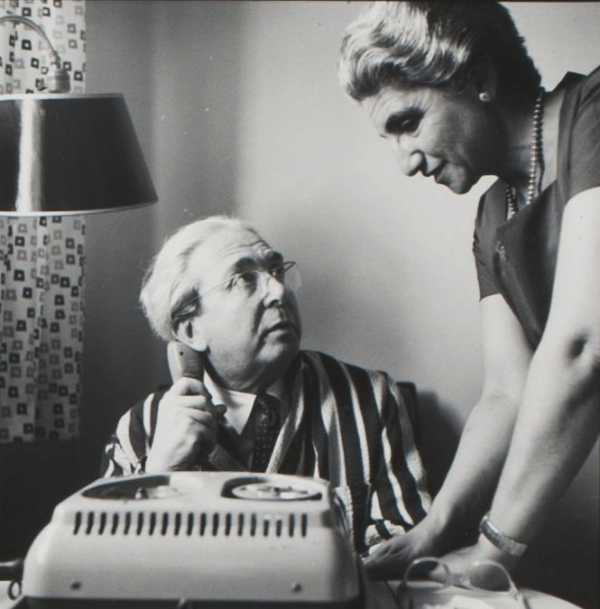
Trude with Leo (University of California San Diego)
That's a big honor for any actor, for certain.  Gertrud Weiss Szilard was a physician and researcher, a person who understood and respected science, and along with her partner, was genuinely trying to wrap her mind around the enormous implications - both extraordinary and very, very dangerous - of atomic physics. In the musical, she's often depicted as an educated twist on the neglected and even nagging wife, but she's also a support, part of Leo Szilard's conscience, and what in Yiddish is known as a noodge. (By the way, isn't Yiddish amazing)?

Speaking of all things Jewish, I'll be blogging more later about the singular experience of Jewish expatriates (especially scientists) later on in the rehearsal process, and about Trude's Jewish identity during and in the wake of World War II and the Holocaust.  Jewish culture is touched on more than a few times in this musical - most obviously their horror at what was happening back home.

Atomic physics cannot have had a greater impact on our 20th and 21st century imagination and politics.  I think it's important to remember that at the heart of this incredible realization that we could bring about the end of civilization in just a few moments were real human souls, ones that we should celebrate and have gratitude for.  More than just a scientific visionary, Szilard was gifted with a real humanity that saw the political and moral ramifications of unleashing their discovery on the world.  He was also an incredibly brave man.  For her part, Trude honored that bravery.  I'm eager to get into that and explore with this phenomenal cast and crew.  Let's sing about science!


Friday, March 27, 2015

We Don't Want This Moment to Die

It's been a very long road for me from seeing the audition notice for Jerry Springer the Opera on New Line's Web site, preparing for the audition and getting up the courage to do it, rehearsing, and performing it these past few weekends with such an incredibly talented, uninhibited, and brave cast and crew.  I'll be honest:

It's exhausting.

And I'm spent!
  • It's trying to everyone's voice - the ranges for all vocal parts run the gamut, it's nonstop singing for the audience members, and characters belt, sing in falsetto and shout.

  • It's mentally taxing - several of us in the "audience" are on stage nearly the entire time.  When I'm not on, I'm doing a quick change and a change back.

  • I have a semi-permanent red patch on my scalp from my ill-conceived plan to make myself look a little edgier by streaking my hair with crimson temporary hair color spray. All my stuff and my boyfriend's stuff is also pink as a result.
I was going for "Demonic."
  ...And it's absolutely wonderful and a delight each and every time. I don't want it to be over.

I haven't been doing theater very long, and I hope to continue doing it, but I can honestly say that I probably won't ever again be doing anything quite as naughty, as bold, clever or controversial as this.  It's an honor to say all those F-bombs, to pretend to gag at a man relieving his bowels onstage, to choke on my disintegrating glittery lips and do hideously lascivious and suggestive things just a spitting distance away from our audience members.

Working with the fellow actors and crew at New Line is always a joy - an absolute clinic for me - as I marvel at their talent and consummate professionalism - but not ever at the expense of fun and creativity.  Just total competence.

Not to tempt fate, but I'm somewhat pleased that whatever protestations this production received were nearly limited to feeble, mostly copied letters from a group who had clearly never seen the opera, and one or two "walkouts," which we expected.  I'm so incredibly proud of the St. Louis theater-going community of which I am a member.  It's evident in the wonderful engagement we have in the performing arts in St. Louis that my hometown, albeit humbled and troubled, is special.  It's great to put something totally insane and offensive out there and to be fully embraced.

So as we close the doors on Jerry, his guests, his audience, and wave goodbye to him one last time, I'm very grateful to have been part of this filthy, wild, bizarre, operatic moment.  If you'll excuse me, I think the lesbians will see me now.

...No, I cannot.


Sunday, March 1, 2015

Hot Enough For Ya?

As we enter "hell week," which may be especially appropriately named given the plot of Jerry Springer: The Opera, New Line Theatre has been getting some very good attention from the local press, such as our NPR affiliate KWMU, as well as the flagship newspaper, the Post-Dispatch.  With that, it means we're also attracting the attention of a few folks who are already upset this is being staged.  A couple of letters of complaint to our director call the choice to stage the show "gauche" (a word that I feel better describes wearing jeans to a wedding, not the damnation-worthy acts the letter-writer describes), while another self-professed Catholic says it offends God and his faith.  I get it - there's plenty for my fellow cast members, crew, audience and I to be a bit appalled by, but there are things like tone, context and satire that the complainers don't know about.

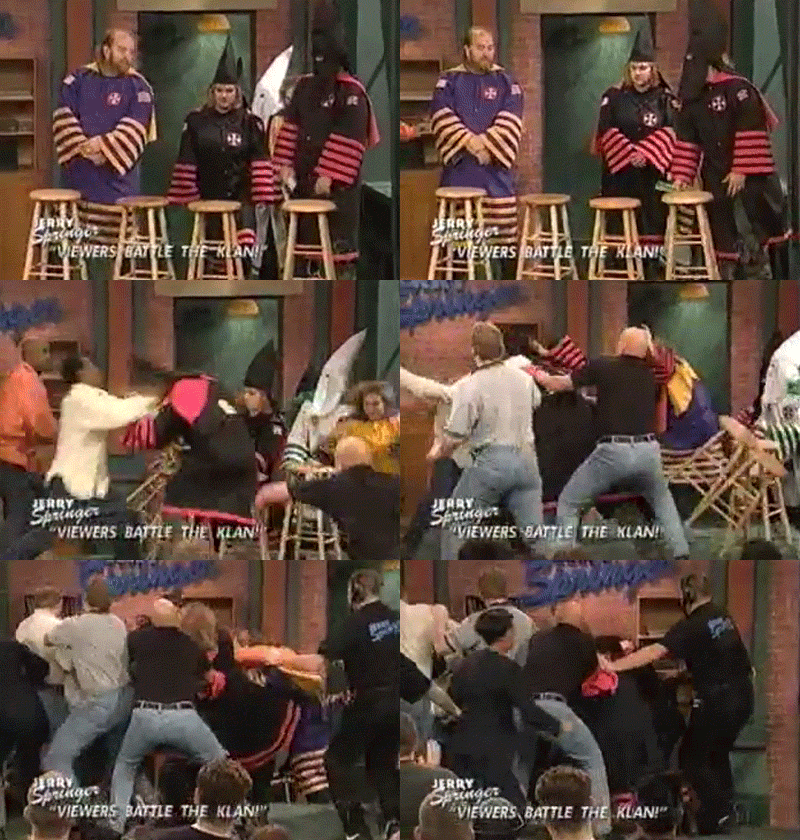
"Jerry Springer" and "offensive" go together like Klan members and well-timed bitch slaps.
Upon seeing these letters, I say, okay, well - I think the entire cast and crew expected ruffled feathers - that's what the point is, in a way, but not at the encouragement of censorship.  However, like the anticipation of an orchard after you plant the seeds, until our little ribald and satirical production-tree has started to bear the fruit of not only ticket sales, but angry, offended Christians, we weren't sure - and still aren't certain how crazy things might get.

In light of these letters, the cast has been sharing more (amongst our group) about their own feelings surrounding this opera.  For my part, I'm an agnosticized (I just made that word up, do you like it?) protestant, a Baptist who grew up in a very liberal church that accepts openly gay couples, transgender people, and welcomes questions of belief and faith.  Having said that, I still have a tight relationship with its religious community. I'm the granddaughter of a minister.  I went to Sunday School weekly growing up.  I have been taking voice lessons from the insanely talented Cecelia Stearman, our pastor's wife, for several years, and have a great relationship with our (now former) pastor, Scott Stearman.  I volunteer with the church regularly to do hands-on community events, went to Serbia with the group and even on a few youth group missions as a chaperone, sang in choir for years, and often perform solo works during worship services - it's still my church.

I have had to pick and choose who to "invite" to the production, and even beg some well-meaning, dear friends not to go - TRUST ME.  People will laugh and ask how bad it could be, and only when I recite the line, "raped by an angel" do they begin to believe me.  Our director Scott Miller's mother is sitting this one out, in fact.  Even my boyfriend, a non-practicing reform Jew with far less of a frame of reference for this stuff, winced a bit at the 'rape' line.  It's hard to know how open to be about it, and you have to pick and choose which of your friends and family can handle it, and who can't.  I can promote the show only by being open and honest with disclaimers about just how offensive the show can be for those who take their faith seriously.

...And their partying seriously.
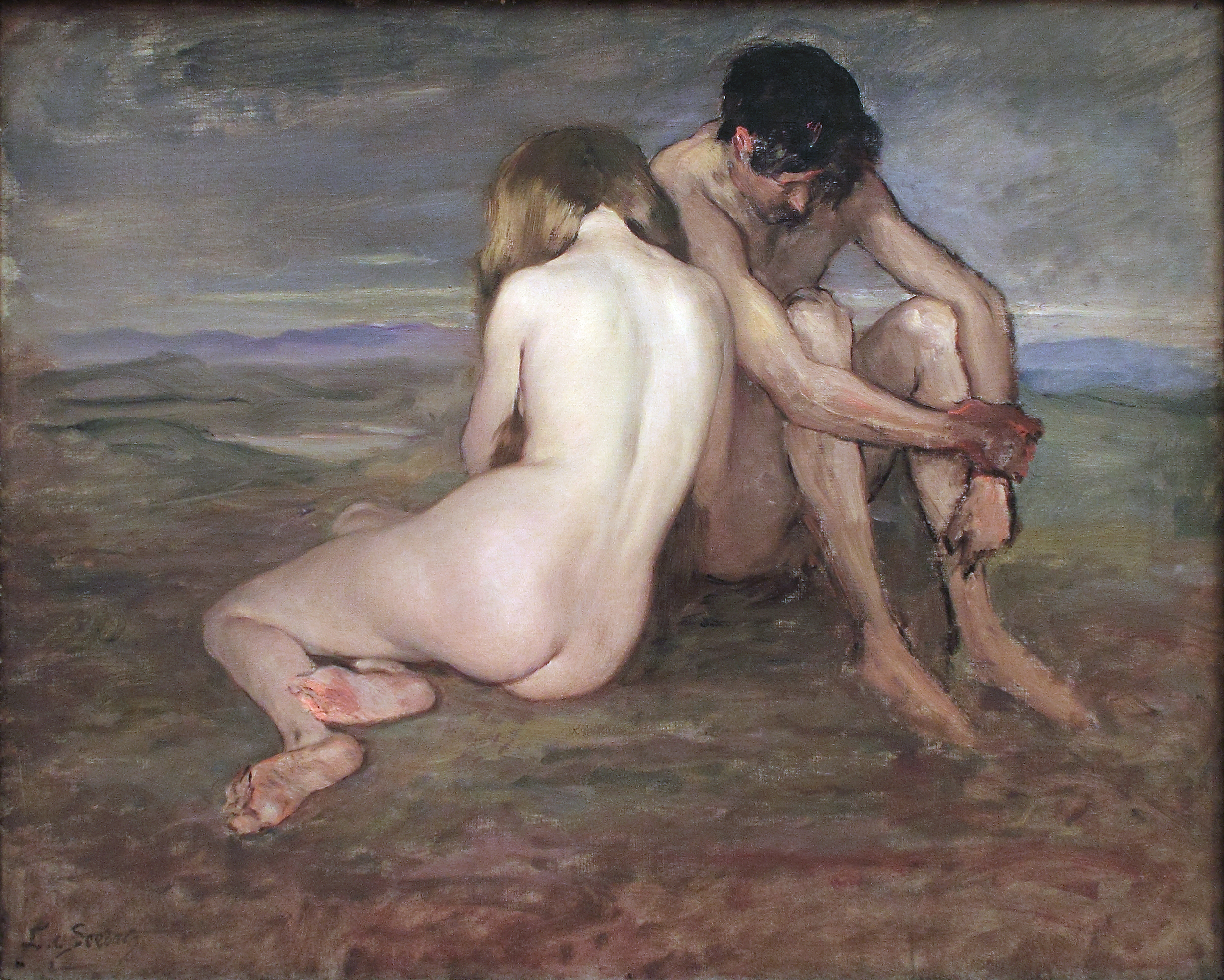
The sense of walking on eggshells is even more so for many of my cast-mates whose families work, volunteer and/or school their children in religiously affiliated institutions every day.  I want everyone to know we're people who are also steeped in faith, but we're also able to step outside of that and create art - in this case, art that is dirty, profane, blasphemous even, and in doing so, portray religious icons as individuals with feelings - feelings that the Bible never explored.  For that, it's been fascinating and eye-opening.  Of course Eve and Adam would have questions for the deity that gave them a life of "grief and misery" for eating "one little apple," of course Mary would want to know where not only her God was but her son when she needed him (as many people do), of course Satan would want forgiveness and redemption - the redemption Jesus seems to offer everyone BUT him.

"Well, that sucked."

This is all wonderfully acted and set to amazing music.  This is really brilliant and brave stuff, people!  But the fact that it is still considered so "edgy" to portray religious figures this way tells us a bit about how easily some people take offense rather than seek to understand, or at least come along on a journey that the art is taking them on.  A month from now, after we've closed our season, I'm sure we'll have offended a few more people, some who have actually seen part of the show, and some who have just read or heard a bit about it.  My hope is that even deeply offended folks stick around long enough to hear what "Jerry" has to say about the sacred in this world, even in a show with so much profanity. 

If anything is sacred, it's definitely Batman.

Thursday, January 22, 2015

Is that supposed to be me?

Among the profanity and often nasty spectacle in Jerry Springer: the Opera are many moments of surprising, haunting beauty.  One such moment occurs when the character of Baby Jane, played by the extraordinarily talented Taylor Pietz, sings about the rank nastiness of the world in an attempt to prove a point. "Society has an ugly face," say the lyrics. "...Jerry did not make it so; he merely holds a mirror to it," she pleads to Satan to be merciful to Jerry for seemingly making hay (and making light of) human misery, absurdity and ignorance. Seriously, when she sings - quite beautifully - about the common man, the people Jerry features - being "smeared with shit," you don't know whether to laugh or to cry.  The audience on the live performance recording, for their part, do not venture a giggle.

Society's face also has mashed potatoes on it.
Maybe it's true that Jerry Springer held a mirror up to the grossness of human beings, but one of the things I find striking about this work is not only its cleverness (please read some of my fellow JS blogger's posts on the matter), nor its hilarity, but the fact that it was written by Brits looking at us, Americans on the other side of the pond.  Jerry Springer, and our love for it, seemed to them fertile ground for growing some fine art, and they weren't wrong.  It should be noted that one of the writers, Richard Thomas, also wrote the libretto for the Anna Nicole opera, so the lowbrow (and classically American) drama-meets-highbrow-art-form-idea is probably appealing to him.

So, maybe it's not Jerry, but Brits looking at Americans using Jerry Springer, or rather, 'Muricans.  There are points at which the British-ness comes through in the lyrics: for example, when Satan offers Jesus "a little biscuit" (what we'd probably call a cookie), as a sarcastic token of reward, or when Satan says Jesus is "banging on" about something (going on and on) and Jesus tells the others they "didn't give a toss" (but hey, that rhymes with cross)!  Most of the time, however, they're pretty much spot-on with plain-old, ill-bred American dialects...those filthy, filthy dialects.  But go one layer deeper, and you're looking at some even more - I might argue affectionately drawn - outrageous, unhinged American stereotypes that were Jerry's regulars: cheating partners, aspiring poledancers, transgender people, and of course, diaper fetishists.  In America, such people are stars!

There's definitely a diaper in the onesie somewhere.  Also, good luck sleeping soundly tonight.

The most telling part of this "Brits'-eye view" for me comes with the sung "ads" during the opera as the first act unfolds much like the eponymous show.  Some are utterly ridiculous - ads for Novocaine or intestinal parasites, but some - like ads for health insurance, finding Jesus, plastic surgery or guns...are completely on the nose and hilarious.  The audience that The Jerry Springer Show was aimed at would have very likely been shown ads for supplemental health insurance and for joining a church/proselytizing, and though firearms advertising laws vary from state to state, no country loves its guns more than America - I mean, 'Murica. 

Ads for Viagra, Prozac, etc., round out the selection - common fare here, but we have to keep in mind that in other countries, direct-to-consumer pharmaceutical advertising is considered profiteering on illness and is banned, as are most privately-owned firearms in general, and our healthcare system appears shockingly misguided, dysfunctional, expensive and just immoral to other countries who see it as a right. Not to get all political, I love many, many things about this country, but no wonder we're such easy targets.  

Am I the only one particularly insulted that this dude wore a Cardinals shirt?
So maybe we do sometimes have a collectively ugly, shit-smeared face.  Thank goodness for art, particularly satire and humor, to hold a mirror to it.  I see this opera both celebrating and condemning the sometimes ridiculous circus of humanity - especially America - and then leaving us with an admonition to "take care of yourselves...and each other."


Tuesday, January 6, 2015

Jer-nalism in the new Millennium

Jer-ry! Jer-ry! We just finished the first rehearsal for Jerry Springer: The Opera. My stomach was in knots, my head felt like I was underwater, but dang - it's going to be awesome.  What a cast - every single voice is on-point, and I have my work cut out for me.  Still, it's surreal and amazing.  I remember reading about the show when it came out in London over 10 years ago.  Dad, knowing I loved musical theater, brought the New York Times over to me in the kitchen and pointed out and article about this opera - not musical theater but actual opera - of the lowest-brow entertainment available at the time, short of donkey shows.  Brilliant! 


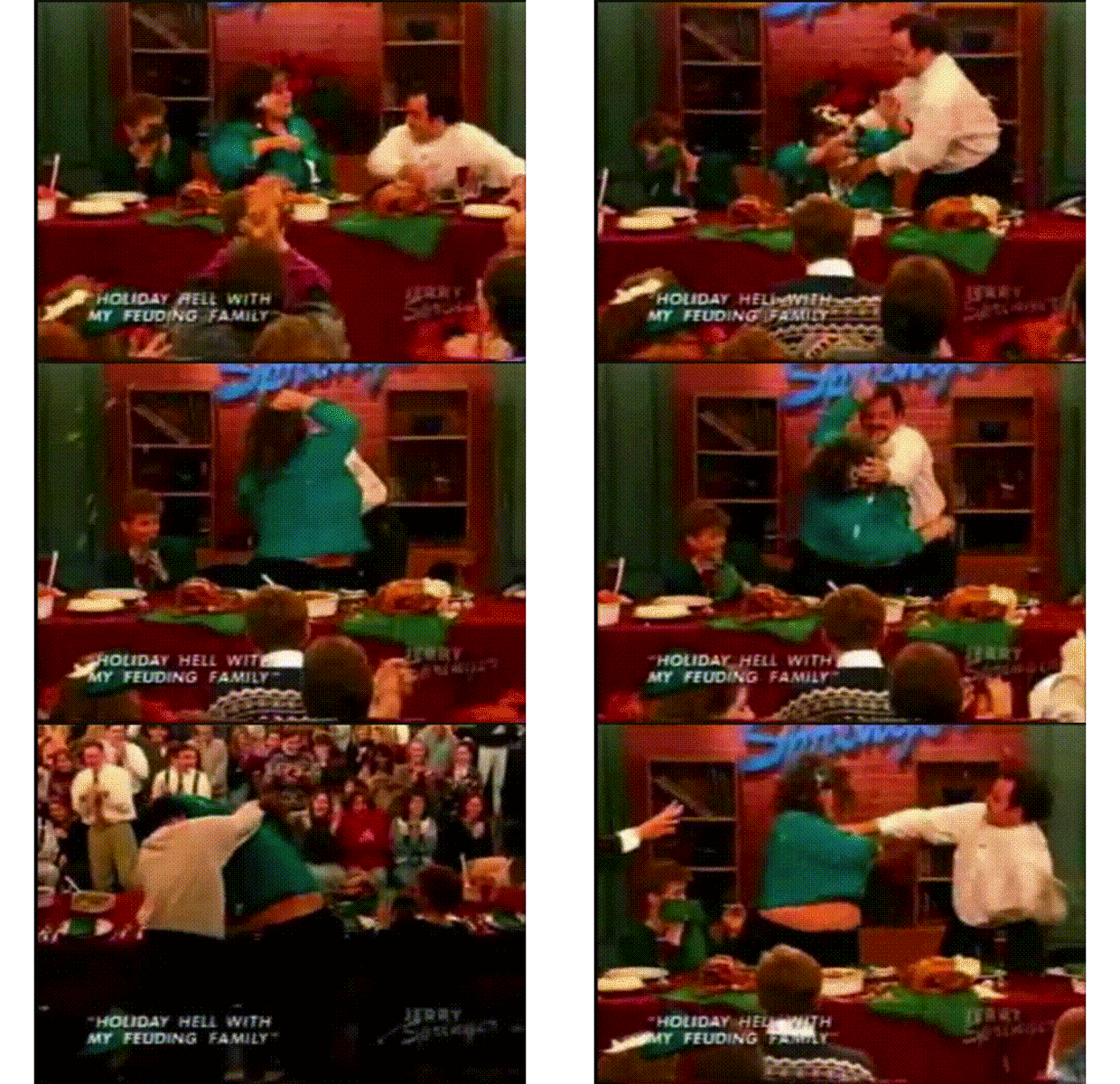
It's been awhile, and we've had time to reflect on the Jerry Springer show.  All throughout the first rehearsal, as these gorgeous voices of Luke, Zak, Taylor, Lindsay and the cast, all saying gloriously dirty things, I kept having flashbacks to being in middle and high school. It was 1995 again, and I was checking out the latest redneck fight on Jerry as I finished some homework.  While I wasn't a dedicated watcher, my favorite episodes were the ones with the Klan, though.  I mean, at least I could pity the trashy cheaters, the purported white supremacists, however?  Delicious disdain - and even if you changed the channel, you could STILL feel superior as you sighed and rolled your eyes at the modern-day freak show.  It was before many folks had taken their kinks and niche interests to the Internet, and before the age of the "reality TV" show.  So really, a simpler time.  A time when we had a live studio audience to hoot at the Mama Junes and Honey Boo Boos of the world.


Remember her name.

Honestly, though - if you think about it, all throughout recorded history, literature and entertainment, we've enjoyed the schadenfreude (yeah, thanks, auto correct, you had my back just now) of watching people we consider weird, outlandish, exotic, just freaks, strange acts, odd bodies, faces, lifestyles, interests...far-out stuff.  That was one of my favorite numbers we rehearsed yesterday - "bring on the losers!" As much as we like to pretend we don't go for stuff like that, never underestimate the power of prurient interest and morbid curiosity to grab the imagination of the masses.  The tradition of the palace fool or jester, the fascination with extremes - dwarfs, giants, etc., the raucous and bloody circus of Roman times, the freak show or side show, talk shows, and now...TLC?

The L stands for Learning.  LEARNING.
I'm not saying without Jerry, there wouldn't be reality TV today, in its endless spinoffs and countless varieties, but there has always been an appetite for this, and Jerry just mainstreamed it quite a bit more, and real or fake, gave it the subtle yet critical spin of these losers WANT this fame - some have always needed the money or means, no matter how dehumanizing things like traveling freak shows have beenThat one element alone has been huge in popularizing shows like Jersey Shore or Here Comes Honey Boo Boo

Now, there's also the idea of inviting the viewer into this world.  By giving us the studio audience and inviting freaks and weirdos on as "guests," Jerry seems to have filled our historic void for gazing at odd stuff (while patting ourselves on the back for our normalcy) and embraced and celebrated fully the wacky spectacle of it all.  Now we have Twitter and such to boo and jeer at society's out-there types - but Jerry did it first, and you can't throw a chair on the Web.


Friday, September 12, 2014

Snapping Whips at Whipper Snappers


Clint Eastwood really looks like crap these days.
I recently watched a documentary on the rise of the “teenage” demographic on Netflix (called Teenage,  what do you know), which, while being a lot less fun and wild than its chosen subject matter, was informative on how the rise of youth culture came about in the United States.  Hell yes, it touched on the young generation during the depression. We like to think that Gen X and Millennials’ rejection of a lot of Boomer-turned-yuppie promises (get a college education, and you’ll get a good-paying job, among other things)might be new, but it’s not.  Beginning with the sad reaping of World War I in nearly a generation lost to brutal conflict and disease – the old sent the young off the war, essentially, to do their dirty work, to die – youth have been mistrusting the elders for quite some time now.  Nearly a century, in fact.   We should think of something to celebrate 100 years of “teenagers.”  It will - nay, SHOULD - probably be forced, patronizing and so super lame. I’ll get back to you.

I hear the kids love to "jitterbug."
 
When Bonnie and Clyde sing “What was always good enough for you,” it’s that same rejection of the elder generation’s ideals.  I love that moment in the musical, not just because I get to trudge around like one of the downtrodden masses, the suckers, but because it’s really a great summation of what youth culture is all about, doing it differently.  Living differently, charting a new course.  Why shouldn’t they be mistrustful of institutions?  Trust in banks, trust in the church, trust in the law – it all turned out to be a crock for them.  They don’t really trust anyone except the gang and each other.  Can we all agree that in musicals and movies, there's no evil, misguidedness or outrage like institutionalized evil, misguidedness or outrage?  (See the corrupt Beadle and the Judge from Sweeney Todd or the hopelessly lost Javert from Les Miserables). Heck, there's even a running theme of generational disconnect running through the fluffy Bye Bye Birdie.
 
I watched it.  It's still entertaining.  I promise.
 
 There’s really nothing more vital to being human, being American, being a critical thinker than questioning authority.  To be honest, it’s something the young often do far better than their elders.  In the very next scene, we see Clyde call out some of this BS.  When you try to do right, you often get screwed over or played for a fool anyway.  He’s more infuriated for the folks in the bank than even they are – yes, maybe because there’s no money for him to steal, but he’s calling out another level of thievery – corporate and institutional thievery, a type for which there really isn’t any justice.  What he’s doing is kind of small potatoes in comparison.  Not right, not just, but honestly dishonest. I appreciate the way both he and Bonnie are drawn.  We don’t have to root for them (you do, you know you do) – especially as killers – but we can see their desperation and determination and admire them for that.  I’d say the coldest fish in this show character-wise might be some of the law enforcement, including pretty much everyone Kent plays (sorry, Kent), most notably the hard-nosed Hamer. 
You couple their somewhat righteous indignation (“tell ‘em, Clyde”) and their thirst for fame, and you have the same heady blend the kids were high on in the rock n’ roll 1950s and the hippie and civil rights-era 60s. If Bonnie can’t have fame, she can have infamy and still get autographs. Who says this generation is the most self-indulgent and navel-gazing yet?  There’s always been plenty of that. 


You guys.  This was totally the autofill Google gave me.  Google, you judgmental bitch!
I’m excited to see how these scenes will come together, with Bonnie and Clyde as the colorful and lively Oz to our beaten-down Kansas.  After all, short as their lives were, they were both very much alive while they lived.  In our own American folklore, we've always been fascinated by the James Deans, the ones who live fast, die young and leave a good looking corpse.  And sadly, it completes their story for them to have flamed out like they did.  Who wants to read a memoir by an elderly, impotent and reformed Clyde or a chastened, tired old Bonnie?  They didn't have to die...but for their legend, sadly, they needed to.  I think that's why we begin and end on their end, but in between we get a bumpy ride - thanks to Bonnie and Clyde.

Tuesday, August 26, 2014

Gimme That Old Time Religion Pt. 2 - The Church and "Bonnie and Clyde"


Bonnie, Clyde, Blanche and Buck are all disillusioned by the hollow promise that a conventional, religious, “working stiff” lifestyle can bring.  They break out of it.  Reject it.  It’s for suckers – not for special people like them.  Bonnie notes this, insisting to her mother that her and Clyde’s way of life is being truly alive, it’s the others that are “walking around dead.”  What an idea – what an image to keep in mind as we stage the opening of the second act next week.  During the Great Depression, the bread lines, Hoovervilles and mass migration really almost were a version of “The Walking Dead” in many ways – people let down by the system, hard-working people sold the American Dream only to have it pop like a balloon.  People joined a hungry throng for survival, following the work and the food.
Good Old USA?  A migrant mother
in the Depression comforts her children.
Image by photographer Dorothea Lange
The second act opens up with a chorus of these folks and the minister musing over the antics of the Barrow Gang.  Surprisingly, the preacher acknowledges that they’re not entirely to blame for their actions without condoning stealing.  Who gets the crowd’s condemnation?  Why, it’s the ‘good old USA.’
Blaming America is a concept that any good patriotic conservative evangelical might choke on.  So what’s going on?

There was indeed a strain of progressivism – even in Christianity - in the 20th century that did try to strive for social justice such as the reforms of the Roosevelt presidency and Civil Rights; these were loosely organized threads that placed emphasis on the idea of redemption and serving the greater good.  Of course, competing strains of evangelicalism were often far more conservative, shunning anything that smelled remotely of socialism. 

Nowhere were these divisions more stark than in the national Baptist Church beginning in the Reagan era.  At national conventions and meetings, ministers would vie for voting power on the direction of the church in a decidedly right-wing direction, for example, shunning women from the ministry, which repulsed other longtime leaders and members.  The church finally fractured in 1990 into the large and powerful Southern Baptist Convention and the more progressive Cooperative Baptist Fellowship.  Baptist churches remain a splintered group under many "parent" organizations.


 Except Westboro Baptist. Nobody wants any part of those assholes. They're always hate-farting.
 I was a kid during that time, but you could feel the tension even in individual churches.  I recall my mom grumbling at a pamphlet included in the church’s Sunday morning bulletin.  It seemed innocuous to my young mind: it advertised a book and speaking series claiming to share exciting information about dinosaurs (which I loved) and how they were involved in the creation, and how the minutemen of the Revolution were all ardent Christians.  Mom knew better. “Ugh…conservative propaganda,” she muttered. 

Around the same time, Dad was on the phone, talking in a calm tone to a member of his Sunday School class.  Somehow, this man had become upset with mom and dad when it was discovered that they were not ardently anti-abortion rights (in a church that staged frequent pro-life rallies).  Our family didn’t stay at that church much longer. 

Is there “room for everyone,” as the preacher says?  There’s always been a conflict between judgmental religiosity and what it probably is supposed to be – welcoming love and redemption.  Jesus, after all, might have had a soft spot for the Barrow Gang, if not the robberies and shootings.  After all, he hung out with the freaks, the misfits and the outcasts, and instead attacked corrupt institutions – quite the anarchist in many ways. 
Eventually, mom and dad found a church where they felt welcome.  I sometimes volunteer there, and have some good friends and mentors who are members.  Divorcees are welcome, as are openly gay couples (and there’s no attempt made to “fix” them) – there are plenty of churches where they’re not, but that’s just the beginning.  It welcomes people of other faiths; it’s where “missions” mean not trying to convert people to Christianity, but physically helping them build or clean up their communities.  As a youth chaperone, I was pleasantly surprised to see that this church unquestioningly celebrated and respected a transgender kid.  The Gateway Men’s Chorus performed as welcome guests.  They host a community gospel choir, a racially and ethnically diverse chorus.  Feminists are welcome and given a forum.  There are actually churches out there like this – they’re just not all that noisy in politics.  But they do suck a lot less.

A great thing to be.
Perhaps the Barrow Gang wasn’t really all that cut out for that sort of existence, however open the church.  There’s always an air of fellowship and “the flock” in a church, which clearly isn’t for most of the folks in the Barrow Gang.  They’re celebrities – one entity that Americans, fickle as we are, worships every bit as fervently as religious deities.  The crowd singing in “Made in America” forgives and almost admires them for making their own way –after all, rugged individualism at any cost is as patriotic as it gets.

Friday, August 22, 2014

Gimme That Old Time Religion Pt. 1 - The Church and "Bonnie and Clyde"

When I was nine years old, my older sister and I were baptized.  Yes, nine, and beforehand, we were obliged to sit down and discuss our faith with the minister at our church at the time – because it was what is known as “believer’s baptism.”  That’s baptism by full immersion in water, not a mere sprinkling on the head of an infant.  It is, as Baptist tradition teaches, the way Jesus himself was drenched in the waters of the Jordan by John the Baptist.  Ideally, it’s supposed to symbolize many things, but most of all, a conscious choice – a death, a burial, a resurrection, a cleansing, and a new life and new covenant with God. 
               
It wasn't this dramatic.  Too bad.


We see a scene like this represented in “Bonnie and Clyde” – the character Buck, Clyde’s brother, is baptized while a preacher sings (in classic gospel style, backed by a choir) that “God’s arms are always open” to welcome sinners – right before Buck gives himself up to the law.  It’s a great scene in which we see Buck trying to make a go of the straight and narrow (and honor his wife’s wishes), while Clyde reaps the benefits of his chosen path until apprehended.  I’d argue that “Bonnie and Clyde” is rife with many more of these musical and dramatic “baptisms,” conscious choices where the characters are awash in reveling in – and committing to – their choices.

Do they, however, have as much agency as they think, though?  In the second act, the preacher sings about how the mixed bag that is American glamour, greed and broken promises gave birth to Bonnie and Clyde – they didn’t happen in a vacuum, the two were natural offspring of the turmoil of the depression and dust bowl.  It’s that push and pull between the characters’ agency and ability to act and their being caught in the jaws of something larger and out of their control, whether it be their passion or their poverty.


Ned and the kids get cleansed by the
Holy Spirit.
I honestly don’t know how much choice I had in my baptism.  While I don’t really regret it, I was just a kid doing what I thought I should do, my parents, my big sis and my grandma thought was the thing to do.  I felt obliged to do it, so I did it, much like Buck.  As he notes bitterly from prison, it didn’t make much of a difference in what came after.   While I’m not disillusioned with what’s at the very heart of wanting to be a good person in the “Christian” sense and a follower of Christ at its best – being the face of Christ and love for others, the idea that God is love, the "last commandment" of loving one another – I later became more interested in the “church” as an institution and a cultural touchstone than I did in the act of unquestioning churchgoing - and I really don't go much any more, though not out of bitterness.   Buck, Bonnie and Clyde sense  the empty promises that religion often offers for themselves (Blanche, Buck's wife, is cut from slightly different cloth, while she follows her husband, she's terribly distraught at living a life of crime) that what they’ve been told growing up ain’t necessarily so, and that in the absence of a caring God’s presence, they’ll have to make their own way any way they can - and they do.